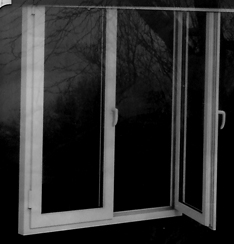
Why Windows Are the Critical Weak Point
A standard external wall with 240 mm solid brick may achieve a field sound reduction index (R'w) of around 50–55 dB. A typical standard double-glazed window in the same wall will have a sound reduction index (Rw) of around 28–32 dB. The window dominates the acoustic performance of the entire facade element because the weakest component limits the system.
The principle is captured in the concept of combined transmission loss: when a wall and window are combined, the overall sound reduction index depends on both the individual Rw values and the area ratio between them. Increasing window area to admit more daylight proportionally reduces the facade's composite acoustic performance, which is why glazing selection is critical in urban and transit-exposed buildings.
Glazing Types and Their Acoustic Properties
Standard Insulating Glass Units (IGU)
A standard double-glazed insulating glass unit (Isolierglas) consists of two panes of float glass separated by a hermetically sealed spacer bar containing a desiccant. The cavity is typically filled with argon or air. Standard IGUs are designed primarily for thermal performance (Uw-value). Their acoustic performance is limited by a dip in sound reduction at the coincidence frequency — typically in the 2–4 kHz range — which reduces effective noise blocking for traffic and speech frequencies.
A common standard double-glazed configuration (4-16-4 mm, meaning 4 mm glass, 16 mm gap, 4 mm glass) achieves an Rw of approximately 28–30 dB. This is adequate for low-noise residential areas but insufficient for buildings exposed to road traffic, rail, or aircraft noise.
Acoustic Glazing (Schallschutzglas)
Acoustic glazing units are engineered to improve sound reduction by addressing the coincidence dip and increasing overall mass. Two primary approaches are used:
- Asymmetric pane thickness — using panes of different thickness (e.g., 4 mm and 6 mm) shifts the coincidence frequencies of each pane to different ranges, preventing them from aligning. This reduces the depth of the combined dip in the frequency response.
- Laminated acoustic glass (VSG/Verbundsicherheitsglas) — one or both panes consist of two glass layers bonded with a polyvinyl butyral (PVB) acoustic interlayer. The interlayer is a viscoelastic material that dissipates vibration energy through internal damping, significantly reducing the coincidence effect. Acoustic PVB interlayers differ from standard safety PVB by their damping characteristics across the relevant frequency range.
Triple Glazing
Triple-glazed units (Dreifachverglasung) add a third pane and a second sealed cavity. While primarily used to achieve very low thermal transmittance (Uw values below 0.7 W/m²K), triple glazing does not automatically deliver better acoustic performance than double glazing. A symmetric triple-glazed unit with equal pane thicknesses may actually have a lower Rw than a well-designed acoustic double unit due to the mass-air-mass resonance of the additional cavity. Acoustic performance must be specified explicitly when selecting triple glazing.
Approximate Rw Values by Glazing Type
- Standard 4-16-4 double glazing: Rw ≈ 28–30 dB
- Asymmetric 4-16-6 double glazing: Rw ≈ 32–34 dB
- Acoustic laminated double (e.g. 66.2 VSG + 16 + 4): Rw ≈ 36–40 dB
- High-performance acoustic double unit: Rw ≈ 42–46 dB
- Triple glazing (standard): Rw ≈ 32–36 dB (varies by configuration)
Rw values are approximate; actual performance depends on specific pane configurations and tested products.
Sound Reduction Index Classifications (Schallschutzklassen)
In Germany, acoustic windows are categorized into Schallschutzklassen (sound insulation classes) defined in DIN EN ISO 10140 and referenced in DIN 4109 supplementary material. These classes simplify product selection for given acoustic targets:
- Class 1: Rw 25–29 dB — minimal additional protection over standard windows
- Class 2: Rw 30–34 dB — basic urban background noise situations
- Class 3: Rw 35–39 dB — moderate road traffic
- Class 4: Rw 40–44 dB — busy roads or light rail proximity
- Class 5: Rw 45–49 dB — heavy traffic or rail corridors
- Class 6: Rw ≥ 50 dB — high-speed rail, motorway proximity, or airport noise exposure zones
Frame and Seal Performance
The glazing unit accounts for the majority of a window's acoustic performance, but the frame and sealing system are critical to realizing the rated value in the installed condition. A high-performance glazing unit installed in a poorly sealing frame will underperform significantly in practice.
Frame Materials
PVC frames are common in German residential construction and offer reasonable acoustic performance. Timber frames and aluminium frames with thermal breaks perform comparably when properly detailed. Multi-chamber PVC profiles with acoustic gaskets perform better than simpler two-chamber profiles. Aluminium frames, if not carefully designed with acoustic-specific gaskets, can transmit structure-borne vibration.
Sealing and Installation
The installation joint between the window frame and the wall opening must be airtight and filled with acoustic-grade foam or mineral wool, not standard expanding foam. DIN 18542 and the RAL quality association guidelines (RAL Gütezeichen Fenster) specify requirements for the joint design and filling materials. A poorly sealed perimeter joint can reduce a high-performance window's effective performance to that of a much lower class.
Trickle ventilators or acoustic ventilation slots built into window frames allow controlled fresh air entry without fully opening the window. These are an important detail in tightly sealed acoustic windows where occupants need ventilation without noise infiltration. Acoustic ventilators include baffled pathways that attenuate sound while allowing airflow.
German Regulatory Context
DIN 4109-1 specifies minimum required sound reduction indices for external windows based on the noise exposure level at the building facade. This is typically calculated from traffic and rail noise data provided in Lärmkarten (noise maps) maintained under the EU Environmental Noise Directive (Directive 2002/49/EC) and published by German municipalities. The Lärmaktionspläne (noise action plans) of major cities including Berlin, Hamburg, and Munich identify building facades exceeding trigger levels that require remediation.
Facade planning in noise-exposed zones requires a calculation of the outdoor noise level (Maßgeblicher Außenlärmpegel) which determines the minimum required window Rw. For buildings near road traffic in German urban areas, Class 3 (Rw ≥ 35 dB) is often the starting point; proximity to major roads, tram lines, or rail corridors may push requirements to Class 4 or higher.